The Story of Jind

Where the story begins

  1. Samudra Manthan
  2. Mahabharata
  3. Jainti Devi
  4. Jaintapuri
  5. Jind
  6. Jind State
  7. Today

श्री जयन्ती देवी मन्दिर (सिद्धपीठ), जींद

मन्दिर की स्थापना से कई कथाएँ जुड़ी हुई हैं। वामन पुराण, नारद पुराण और पद्म पुराण में भी जीन्द का उल्लेख मिलता है।

यह कहा जाता है कि समुद्र मंथन के समय श्री देव सेनापति जयन्त ने यहाँ पर दानवों से अमृत कलश पाने के लिए इसी स्थान पर पूजा-अर्चना कर विजय का आशीर्वाद माँगा था और अमृत कलश को देवताओं के पास पहुँचाया था। इसके बाद महाभारत काल में पाण्डवों ने यहाँ पर विजय के लिए जयन्ती देवी के मन्दिर में पूजा की थी। माँ के नाम पर ही शहर का नाम जयंती प्रस्थ रखा गया था। समय के साथ जयंतीपुरी का नाम बदलकर जीन्द हो गया।

इसके बाद महाराजा जीन्द ने लजवाना गाँव विजय के बाद यहाँ पर एक राजराजेश्वरी मन्दिर का निर्माण करवाया था। आज भी भक्तजन अपनी मनोकामनाओं के पूर्ण करने के लिए मन्दिर में यज्ञ, पूजा-अर्चना व भण्डारे व निर्माण कार्य आदि आयोजित करते हैं।

Read in English

Many stories are associated with the founding of the temple. Jind is also mentioned in the Vamana Purana, the Narada Purana and the Padma Purana.

It is said that at the time of the Samudra Manthan, the churning of the ocean, Shri Jayant, commander of the devas, worshipped at this very place and sought the blessing of victory in order to win the pot of amrit from the danavas, and carried the pot of amrit to the devas. Later, in the age of the Mahabharata, the Pandavas worshipped here at the temple of Jayanti Devi for victory. The city was named Jayanti Prastha after the Mother. Over time, the name Jayantipuri changed to Jind.

Later, after his victory at the village of Lajwana, the Maharaja of Jind had a Rajrajeshwari temple built here. Even today, devotees hold yajnas, puja-archana and bhandaras, and contribute to building works at the temple, for the fulfilment of their wishes.

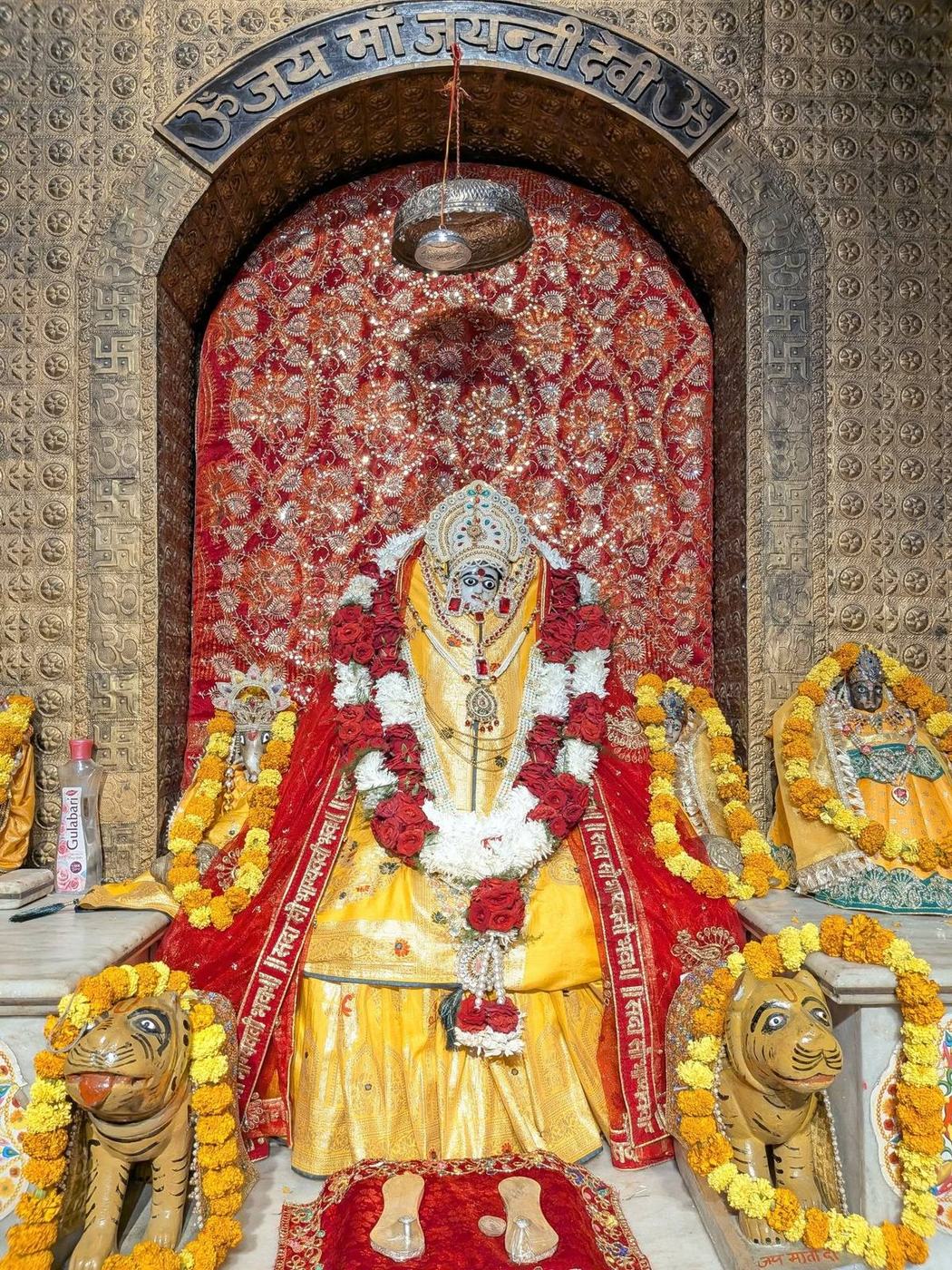
Maa Jayanti Devi in the sanctum, beneath the inscription Jai Maa Jayanti Devi
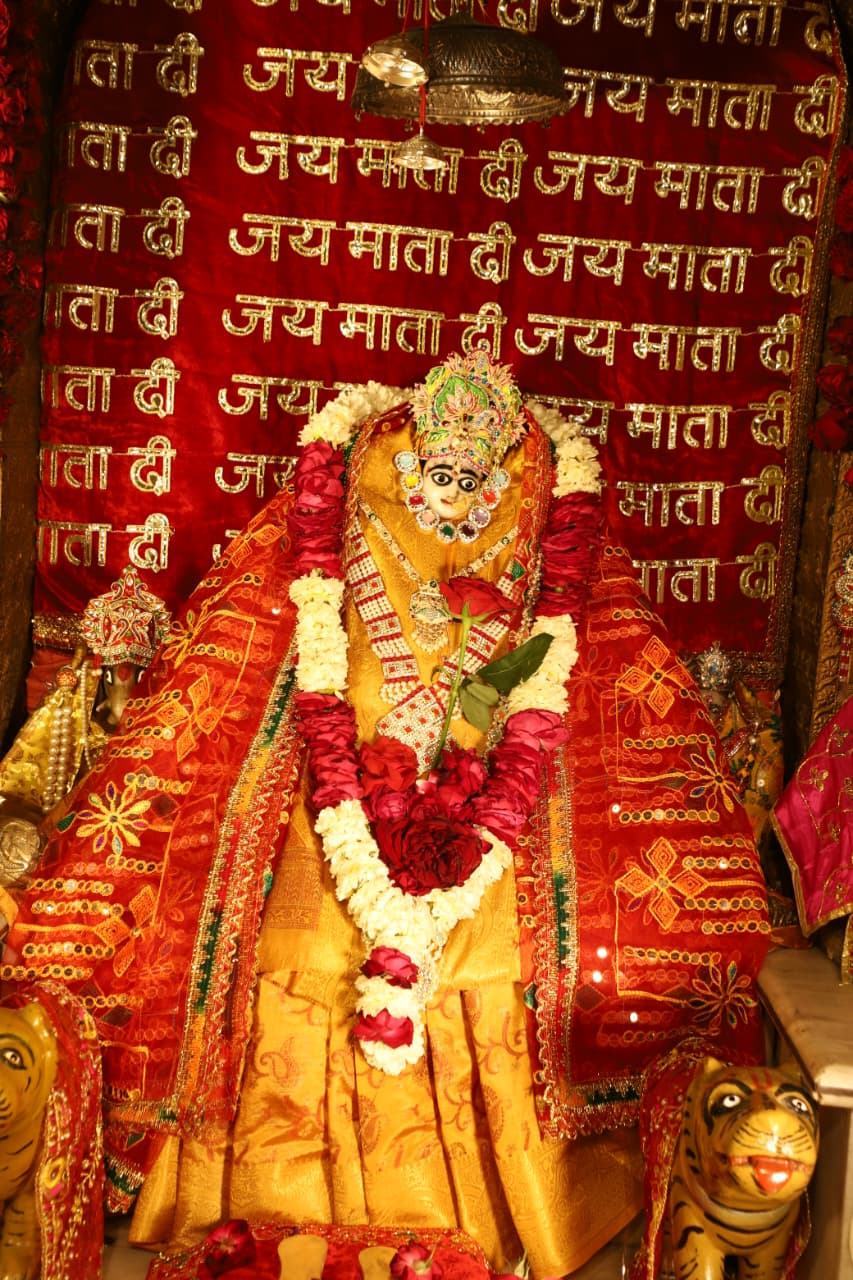
Maa Jayanti Devi in the sanctum, before a wall inscribed with Jai Mata Di

Maa Jayanti Devi

Daughter of Indra

Maa Jayanti Devi is revered as the daughter of Indra, the king of the devas, and the Goddess of Victory.

Jayanti Devi was the daughter of Indra and the sister of Jayanta. Her story appears in the Devī Bhāgavata Purāṇa, where Indra sends Jayanti to serve Shukracharya during his long penance. She serves him with devotion, and after his penance is completed, Śukra takes Devi ma as his wife.

The name Jayanti is associated with victory, giving special meaning to the way Maa Jayanti Devi is worshipped at Jind. Here, she is not only the presiding deity of the temple, but the goddess at the heart of the city’s traditional origin story.

The Pandavas worshipped Maa Jayanti Devi before the great battle of Kurukshetra, seeking her blessings for victory. A temple was established in her honour, and the settlement that grew around it came to be known as Jaintapuri — the abode of Jainti Devi — eventually becoming Jind.

Thus, the story of Maa Jayanti Devi brings together divine lineage, the ancient traditions of the Mahabharata and the very name and identity of Jind.

Mahabharata

The traditional history of Jind reaches back to the age of the Mahabharata.

According to local tradition, the Pandavas built a temple here in honour of Jainti Devi and prayed for victory before going to battle against the Kauravas. A settlement subsequently grew around the shrine. It was known as Jaintapuri, meaning the abode of Jainti Devi, and the name eventually evolved into Jind.

The Government of Haryana describes Jainti as an ancient tirtha mentioned in connection with the Mahabharata and the Padma Purana, and identifies Jind’s traditional history with the wider sacred geography of Kurukshetra.
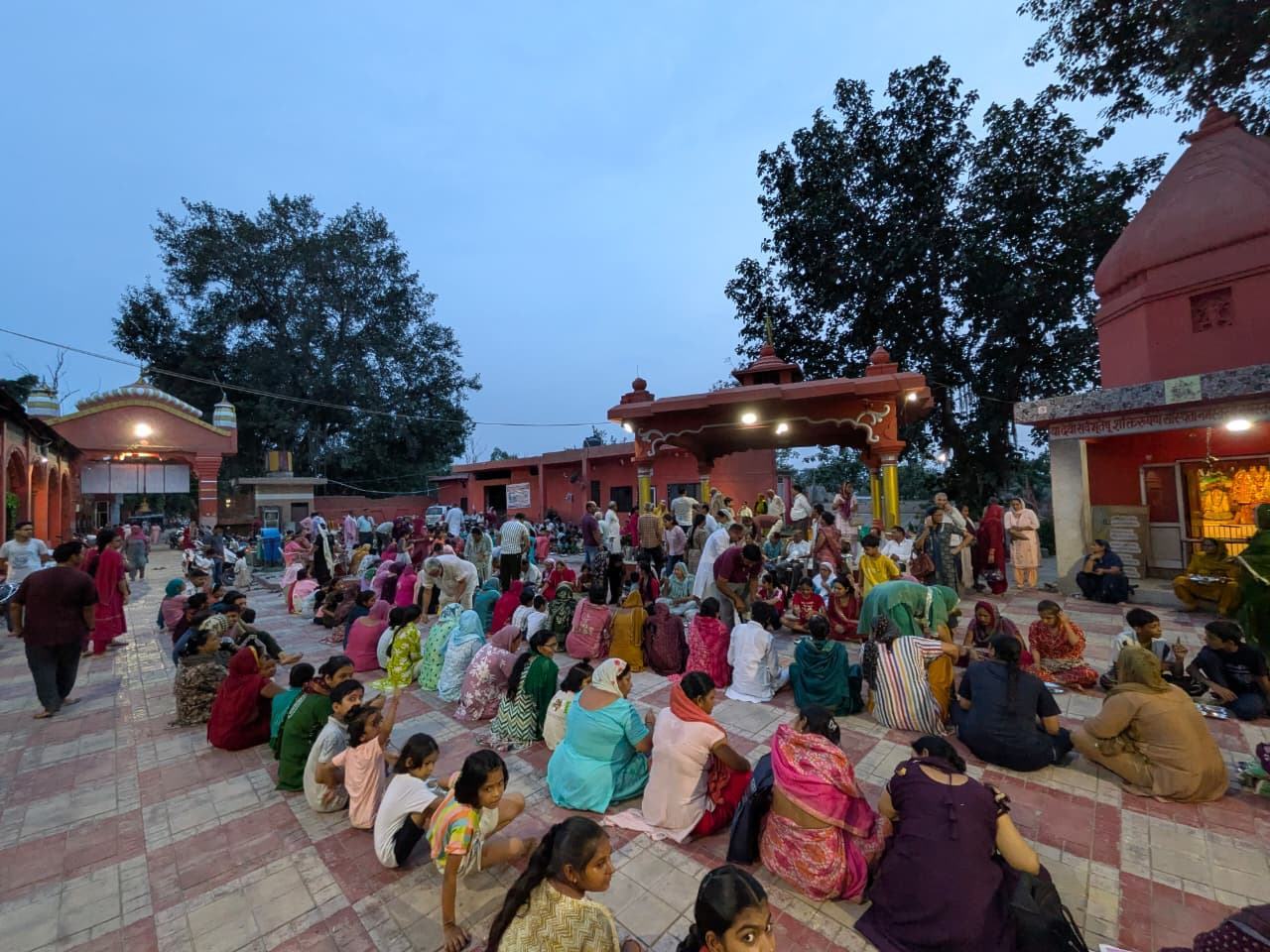
The temple shikharas at dusk

Kurukshetra

Jind and Kurukshetra

The Jind region formed part of the traditional geographical area associated with Kurukshetra. The district contains numerous sites connected with religious traditions and references in the Mahabharata and the Puranic literature.

The region’s antiquity is also reflected in archaeological discoveries, including Pre-Harappan, Late-Harappan and Painted Grey Ware material found at various locations across the district.

1775–1776

From ancient tradition to Jind State

Centuries later, Jind became an important political centre.

Raja Gajpat Singh established Jind as the capital of his state in 1776, after taking control of territory in the region. A fort was constructed at Jind in 1775.

The history of the city therefore stretches across very different eras—but throughout its traditional history, Jayanti Devi remains at its centre.